Contact traces of textile fibres
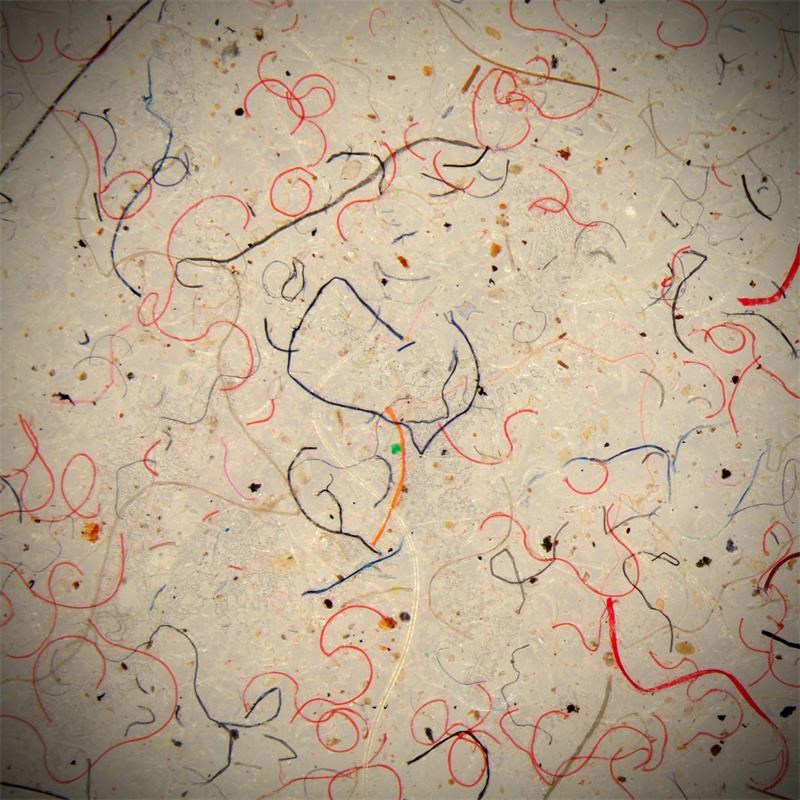
Textile fibres are left behind in criminal offense where there was contact between the victim and the perpetrator, their contact with the crime scene, as well as with the object with which the criminal offense was committed. Microtraces of textile fibres can only be seen using a magnifying glass or under a microscope, and it was only through the development of science and technology and especially modern microscopy, that it was possible to conduct their examination.
Forensic examinations of textile fibre traces differ significantly from examinations performed in the textile industry due to the extremely small amount of traces. Textile factories have a large amount of material at their disposal, and examinations mainly relate to quality, while in forensics experts are asked to identify small pieces of textile with a textile object (most often an item of clothing). Expert examination determines the possible origin of the questioned piece of textile and the type of material to which the questioned piece belonged. The great differences in morphology, as well as chemical and physical properties, of individual textile fibres contribute to their significance in forensics.
The process of expert examination of textile fibre traces
Recovery of microtraces and collection of known samples - the most suitable method for recovery, storage and preservation of textile fibre microtraces is transparent adhesive tape, which does not affect the chemical composition and shape of the fibres. Textile fibres recovered using this method can be stored for a longer period of time. In addition to microtraces, it is necessary to collect known sample of the textile item so that all colours are represented.
Preliminary examination - includes preparation and description of prepared fibres from known samples of clothing/textile items, as well as extraction of relevant textile fibres from transparent adhesive tapes under a stereomicroscope. This examination only indicates the similarity of the questioned and known samples.
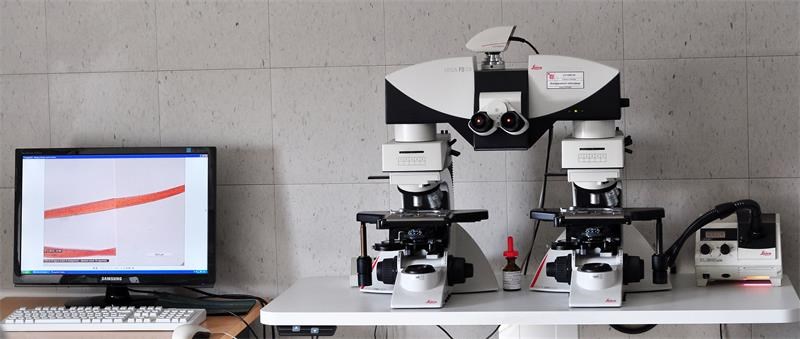
Comparative microscopic examination - a higher degree of differentiation of textile fibres is carried out by examination under a comparative microscope with a magnification of up to 400x, where the questioned and known fibres are observed simultaneously. In this process, the fibres are examined in bright-field transmitted light, transmitted polarized light and fluorescence.
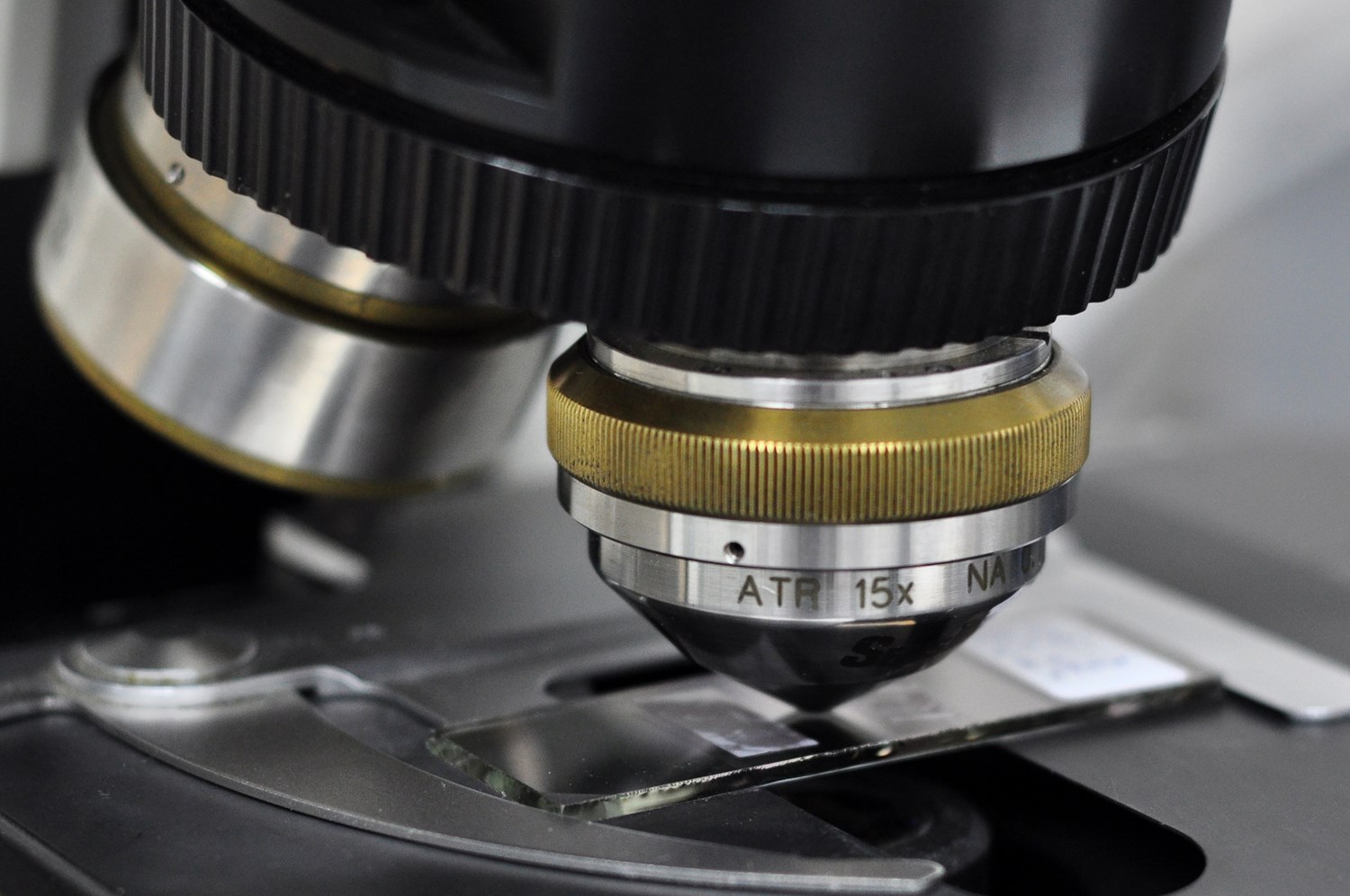
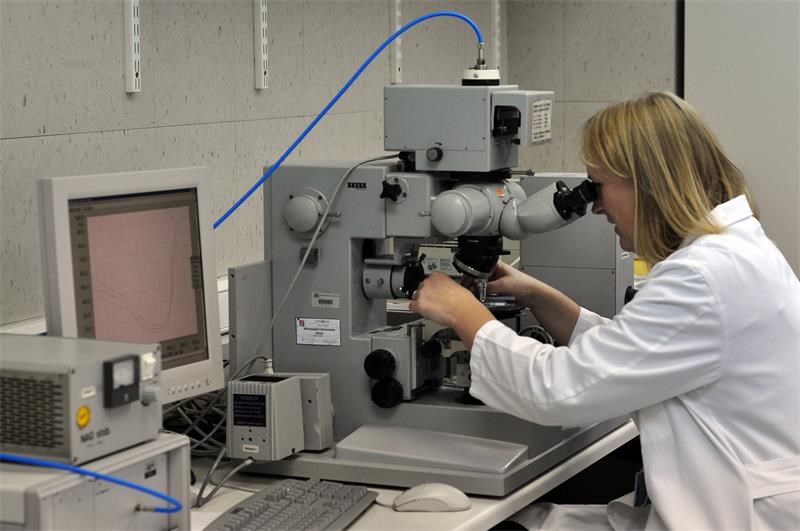
Chemical-physical examination - objective analysis of textile fibres with a relatively high degree of discrimination is carried out using devices that provide the possibility of non-destructive examination: IR microspectrometer, which determines and compares the chemical composition of fibres, and UV-VIS microspectrophotometer, which compares the colour shade of the questioned/known fibre.
Mechanical fitting of textile materials - it is used to analyze the characteristics of questioned and known textile materials/fragments to determine if they were once part of a single unit. It is carried out in cases when, for example, a torn part of a textile item remains at the crime scene.
Accredited method:
- Examination of textile fibres on a comparative microscope
Služba bioloških i kontaktnih vještačenja 113
Department of biology and fibres 113
Područje vještačenja tekstilnih vlakana 113/2
Division of fibres 113/2
Department of biology and fibres 113
Područje vještačenja tekstilnih vlakana 113/2
Division of fibres 113/2
| Vrsta ispitivanja Type of test |
Materijali/Proizvodi Materials/Products |
Tehnika ispitivanja Test technique |
Metoda ispitivanja Test method |
U primjeni od In use from |
|---|---|---|---|---|
| Vještačenje tragova tekstilnih vlakana Textile fibres examination |
Tekstilna vlakna Textile fibres |
Komparativna mikroskopija Comparative microscopy |
Vlastita metoda/ RU-113/2-5, v4.3, 2024-11-5 Ispitivanje tekstilnih vlakana na komparativnom mikroskopu In house method/ RU-113/2-5, v4.3, 2024-11-5 Examination of textile fibers under a comparative microscope |
2009-05-04 |