Forensic Genomics Laboratory
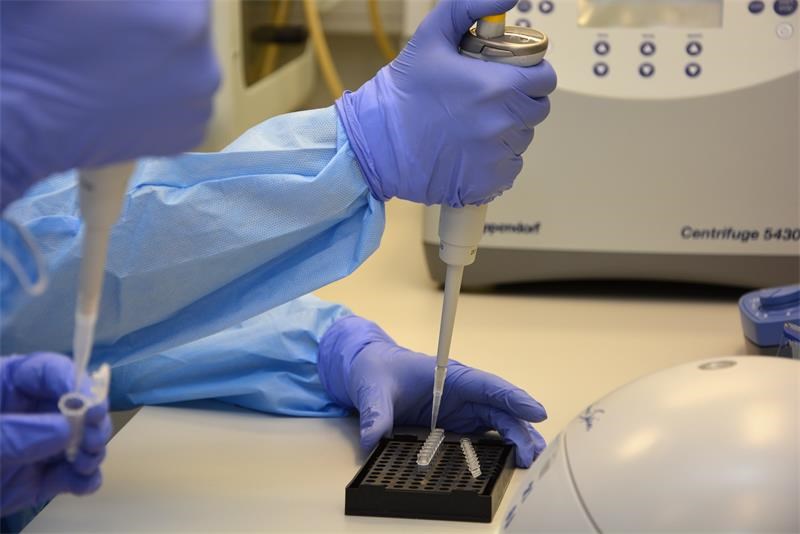
In 2016, the Centre established a forensic laboratory for human identification based on massively parallel DNA sequencing technology (massively parallel sequencing - MPS or next-generation sequencing - NGS). MPS is a breakthrough technology that allows for relatively easy and rapid access to the genomic material of all living organisms. Genomes carry vast amounts of data encoded in the nucleotide sequence of any organism's DNA molecule, which today's MPS devices “read” in just a few days or even hours. By way of comparison, the first international project to “read” the human genome, which contains approximately 3.2 billion base pairs, took more than 10 years and cost billions of dollars. With the development of new sequencing technology, analysis time and costs have been greatly reduced, enabling the incorporation of MPS technology into all fields where the DNA molecule is the subject of research.
MPS technology has entered the field of forensics relatively recently. Its potential to overcome the greatest challenges of DNA identification in forensics, primarily due to the nature of samples that are often of extremely poor quality, has been recognised. DNA on evidence or at the crime scene is often present in scarce quantities and is highly degraded due to the effects of adverse external factors such as heat, moisture, UV radiation, etc. Furthermore, DNA in forensic traces can often originate from two or more individuals and can be contaminated with animal, plant or bacterial DNA. All of the above makes analysis extremely difficult and affects the success of the forensic examination.
The existing routine method is based on the simultaneous analysis of a limited number of segments of the human genome, by analysing the length of DNA fragments rather than their nucleotide sequence. If, for any of the reasons mentioned above, the number of loci available for analysis is reduced, this results in incomplete DNA profiles, which are often insufficient for successful identification. MPS technology enables simultaneous analysis of over 200 loci in a single sample, relevant not only for human identification, but also for determination of phenotypic characteristics and biogeographical ancestry of individuals. The increased number of DNA markers also increases the likelihood of trace identification and provides the opportunity to obtain the maximum amount of data from samples of, originally, poor quality.
MPS technology has entered the field of forensics relatively recently. Its potential to overcome the greatest challenges of DNA identification in forensics, primarily due to the nature of samples that are often of extremely poor quality, has been recognised. DNA on evidence or at the crime scene is often present in scarce quantities and is highly degraded due to the effects of adverse external factors such as heat, moisture, UV radiation, etc. Furthermore, DNA in forensic traces can often originate from two or more individuals and can be contaminated with animal, plant or bacterial DNA. All of the above makes analysis extremely difficult and affects the success of the forensic examination.
The existing routine method is based on the simultaneous analysis of a limited number of segments of the human genome, by analysing the length of DNA fragments rather than their nucleotide sequence. If, for any of the reasons mentioned above, the number of loci available for analysis is reduced, this results in incomplete DNA profiles, which are often insufficient for successful identification. MPS technology enables simultaneous analysis of over 200 loci in a single sample, relevant not only for human identification, but also for determination of phenotypic characteristics and biogeographical ancestry of individuals. The increased number of DNA markers also increases the likelihood of trace identification and provides the opportunity to obtain the maximum amount of data from samples of, originally, poor quality.